Technical Development — The Schöner
A deep look into the making of The Schöner. Factory geometry of the Murciélago, the STP master of our structure, and the engineering that answers a steel-era car with a prepreg carbon tub — then a steel skeleton that still knows how to carry a V12.
The Architecture of Permanence
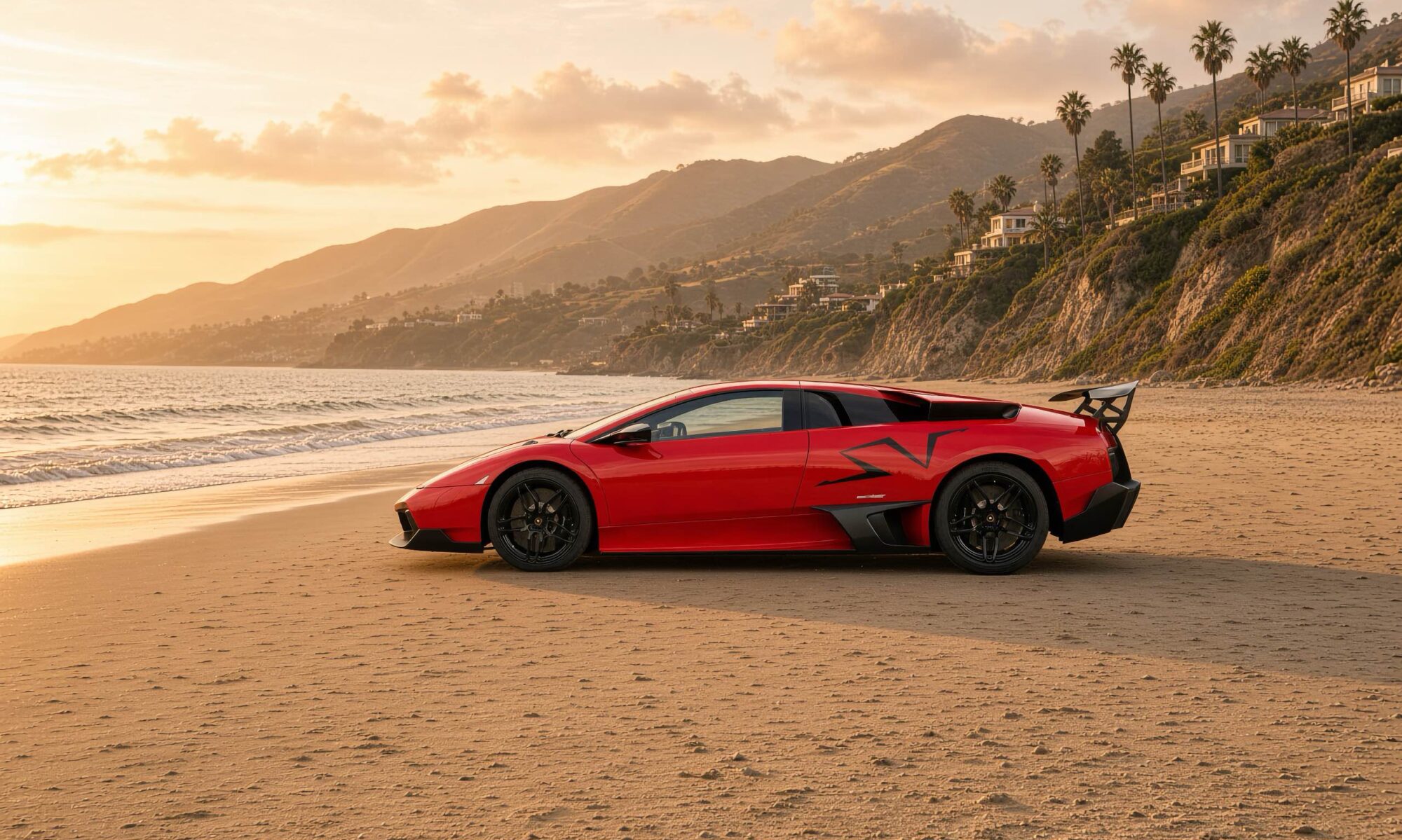
The silhouette remains the one Sant’Agata drew for the last naturally aspirated twelve. The foundation does not remain a single material.
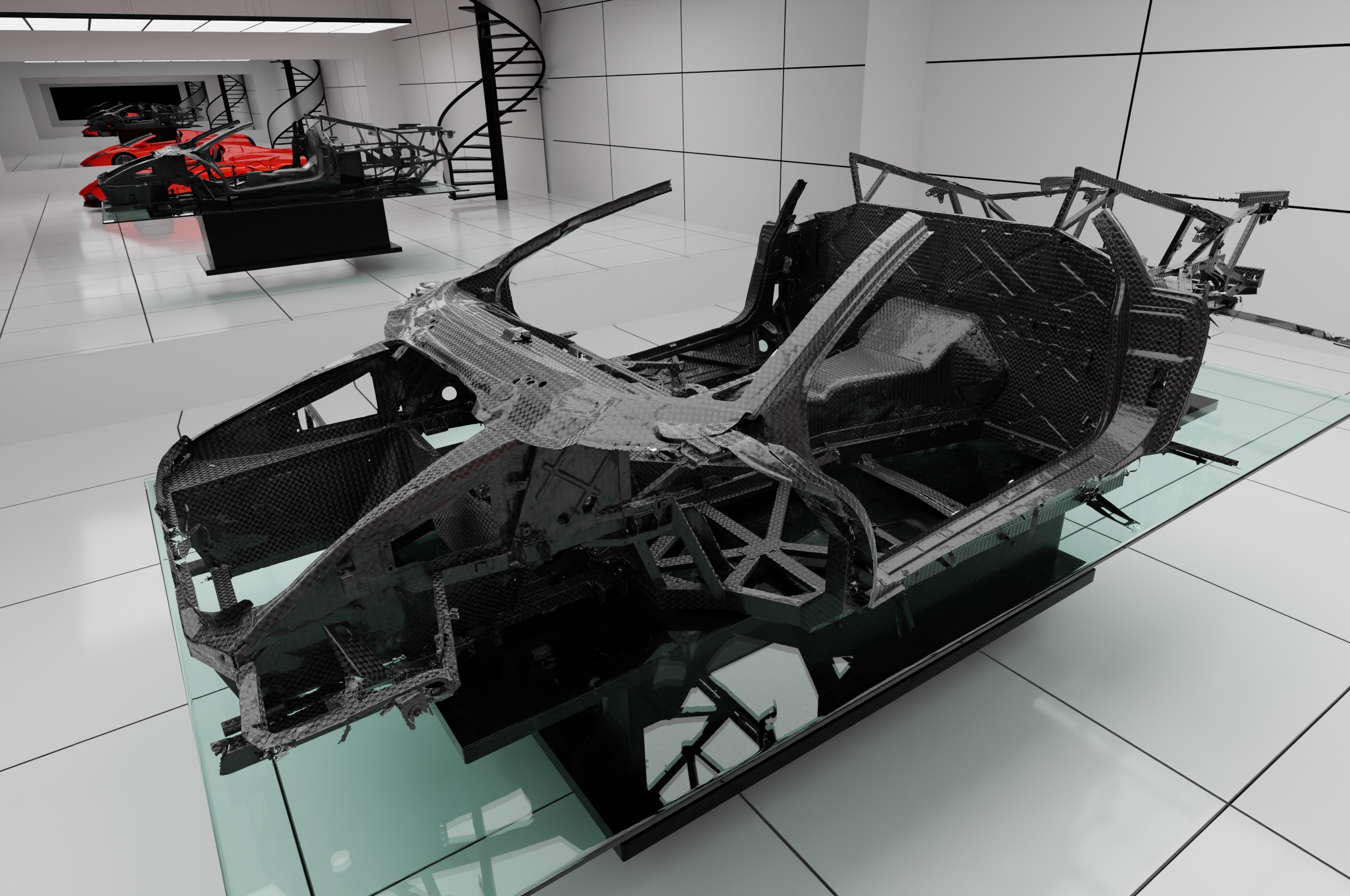
The Schöner is built as a sequence. First, a purpose-made monocoque: a centre tub in autoclave-cured prepreg, drawn to receive the Murciélago body shell. Then, ensuite, a steel skeleton chassis — the load paths, the frames, the hard points that carbon alone should not be asked to shout through.
Not an electric conversion. Not a restomod. A new car in a legendary skin: composite where the tub must be light and closed, steel where the skeleton must remain honest to mounts, crash, and the longitudinal heart.
Behind the Scenes: Technical Milestones
1. Digitisation & the CAD Master
TheSchoner.com — Development
The car was scanned. The drawing was already waiting.
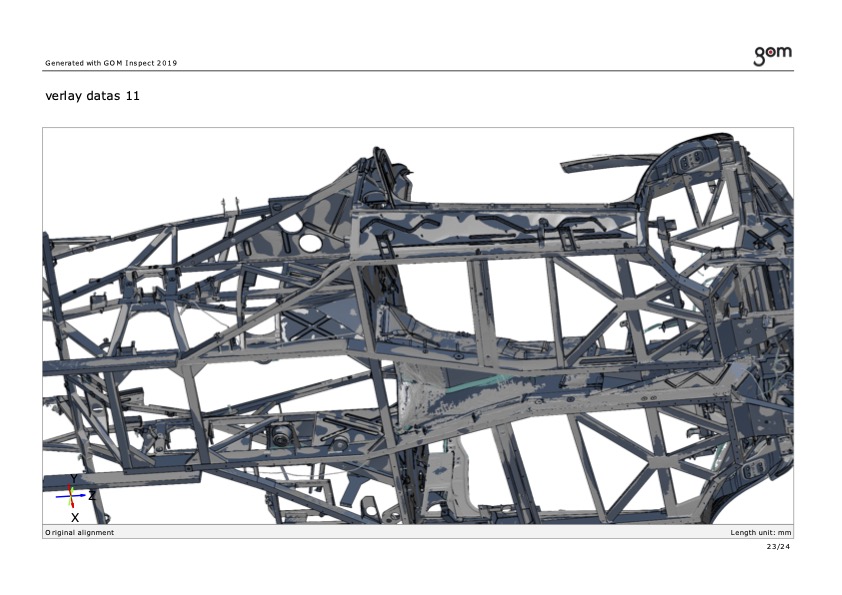
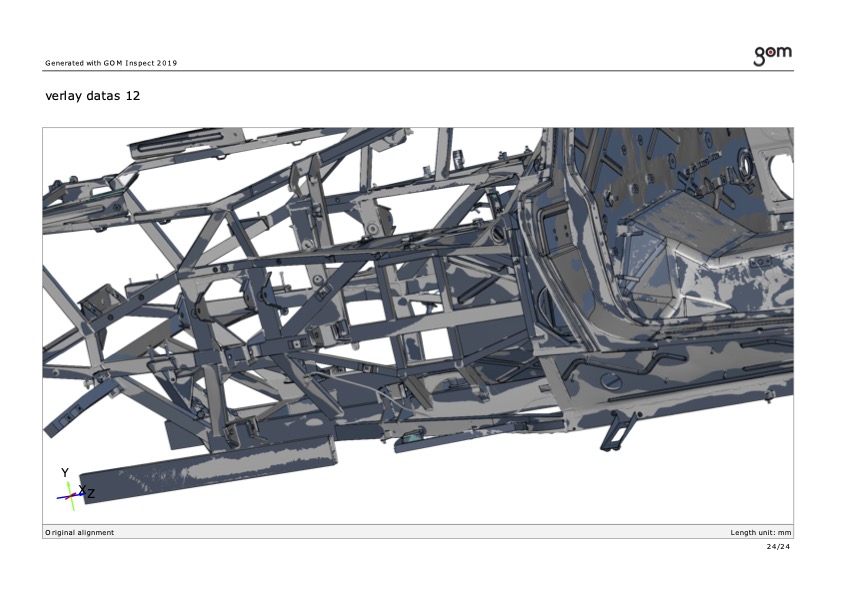
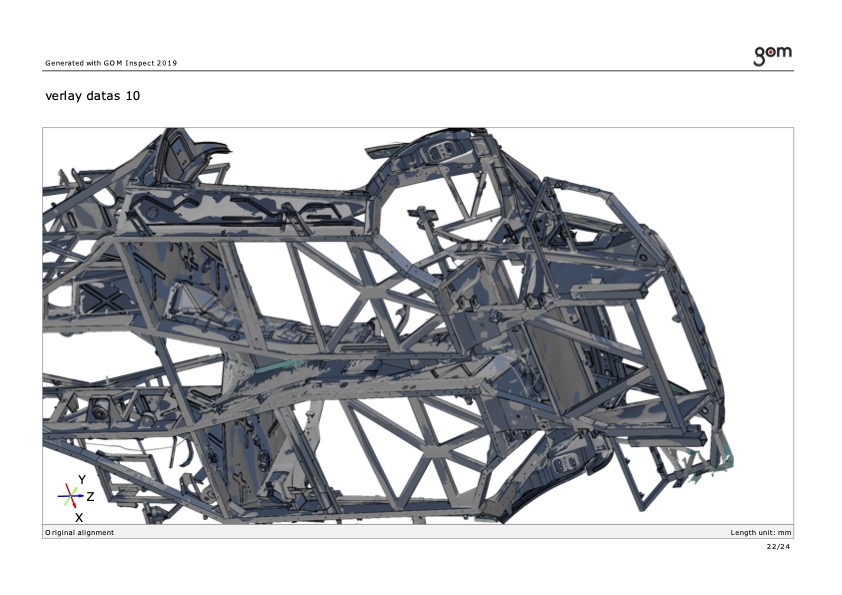
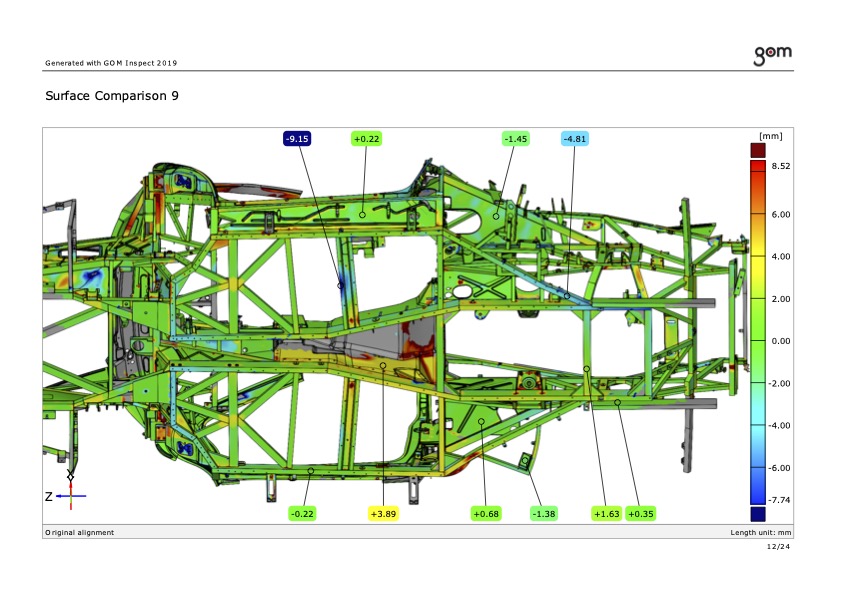
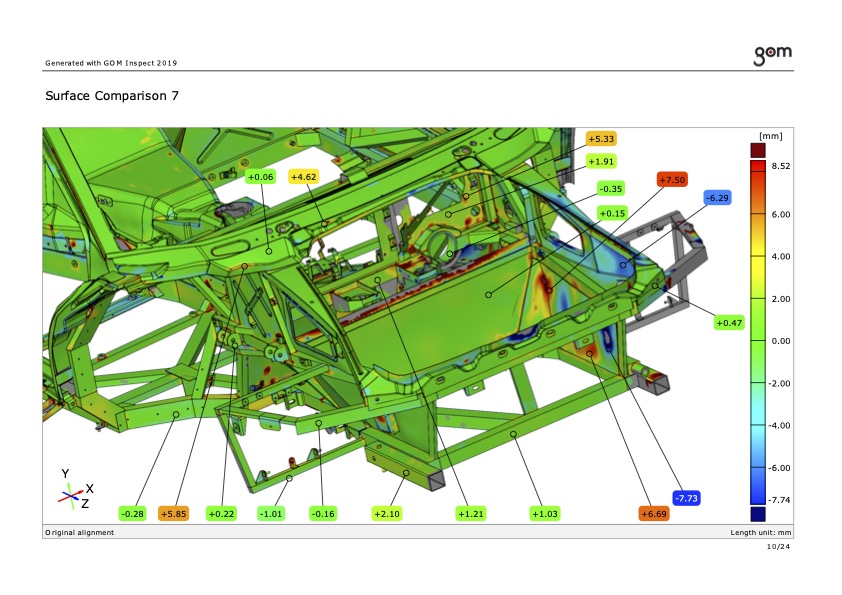
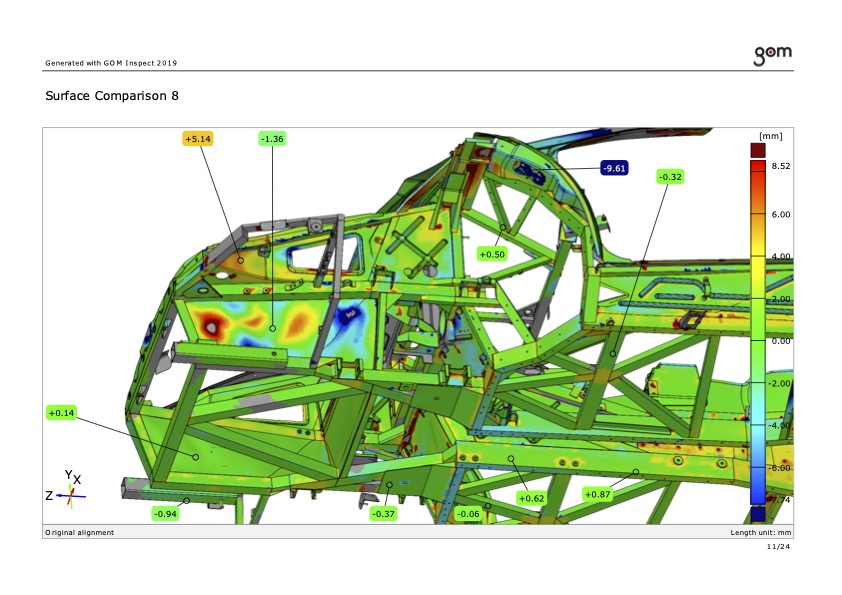
High-fidelity geometry of the Murciélago — sills, tunnel, lids, the lines a body panel still remembers — was set against our STP file and read through GOM. Point cloud against blueprint. The tub and the steel skeleton inspected as one conversation, not two decorations.
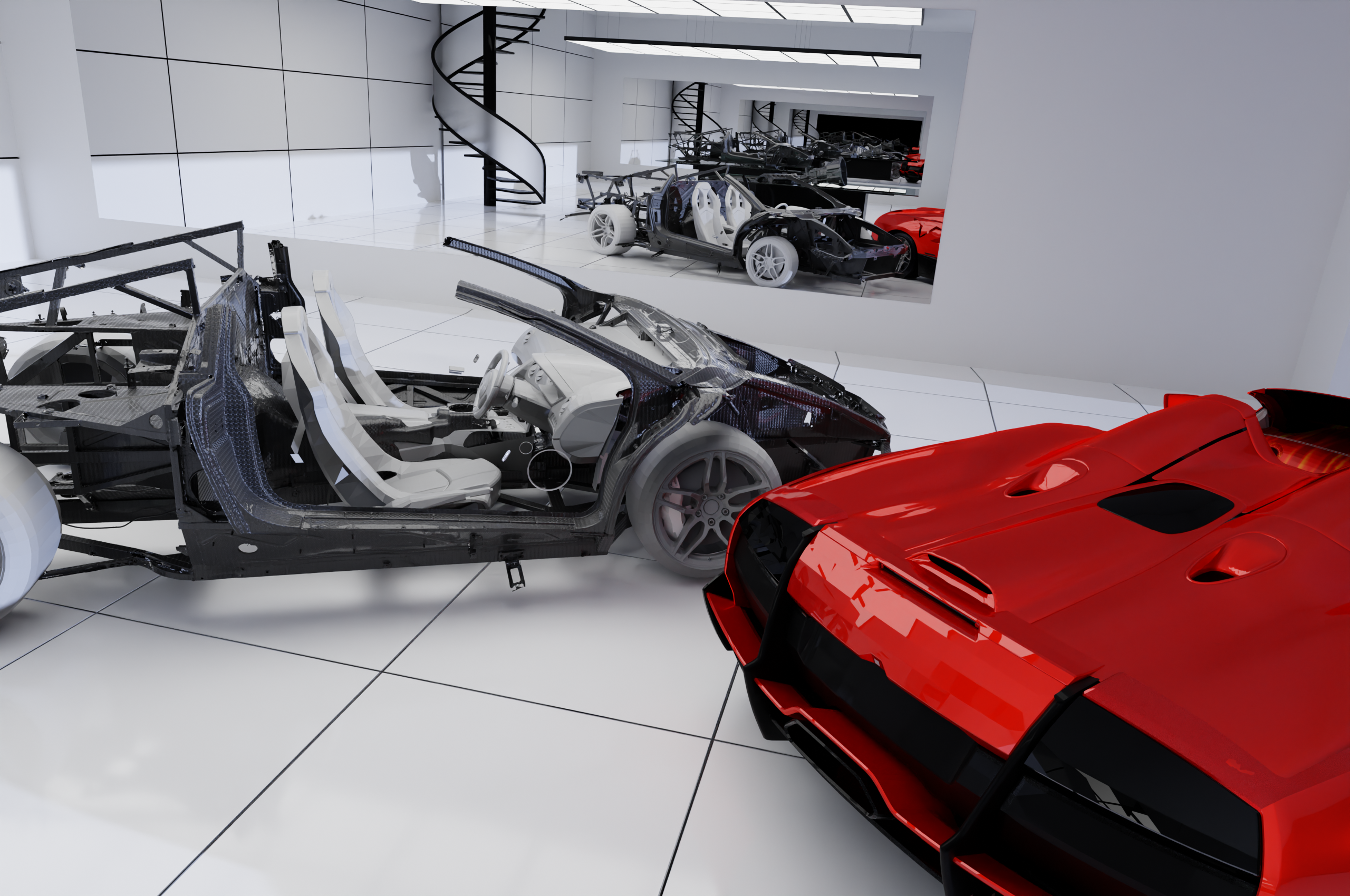
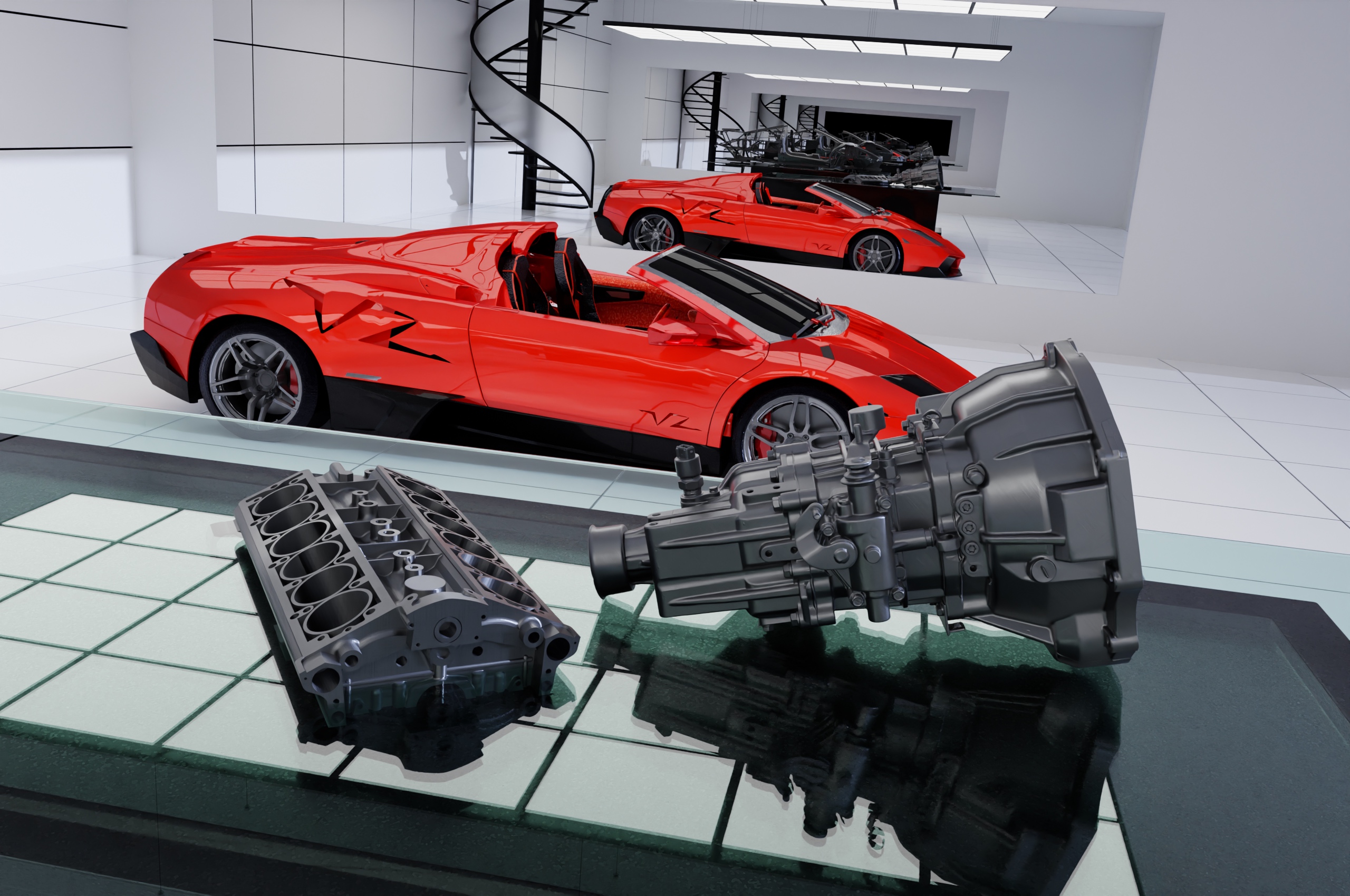
What the gallery shows is that hour: OEM Murciélago chassis beside The Schöner, the scan asking whether shell, carbon and steel still recognise one another.
2. Structural Integrity: Carbon Tub, Steel Skeleton
A 100% prepreg carbon centre tub — dry weight in the region of 65 kg — forming the closed cell of the car. Ensuite, the steel skeleton: front and rear structure, reinforcements, the architecture that takes suspension, drivetrain and impact and does not ask the weave to pretend it is tube.
Integrated mounts where tub and skeleton meet. Torsional rigidity sought as a feeling the original Murciélago never quite owned: a carbon room that does not flex, a steel frame that still knows how a twelve-cylinder arrives.
This sub-page holds the path from digital master to layup to autoclave — and the steel that follows the carbon into the same light. FEA where it exists. Drawings where they tell the truth.
3. Drivetrain Interface: The V12 Remains
The problem is not a new heart. It is letting the original one speak through a lighter cage that has not forgotten metal.
Technical drawings document how the longitudinal V12, the gearbox and the all-wheel architecture find their points on the steel skeleton, while the carbon tub keeps the centre closed and still. Heat, mounts, the rear room a roadster will ask to be stiffer than a coupé. The slim rear profile stays. The old ladder, as it was, does not.
The Living Blueprint
For those inside the first circle, the process is left visible.
- Iterative 3D work: tub and skeleton evolving in the same file until GOM would accept both.
- Material science: why prepreg for the monocoque, why steel for the skeleton, how weave and weld are asked to live beside factory Murciélago glass and panel.
- Body harmony: confirmation that LP-series lines still close over a structure the 2000s never built.
The Schöner
Twenty-five. Worldwide.